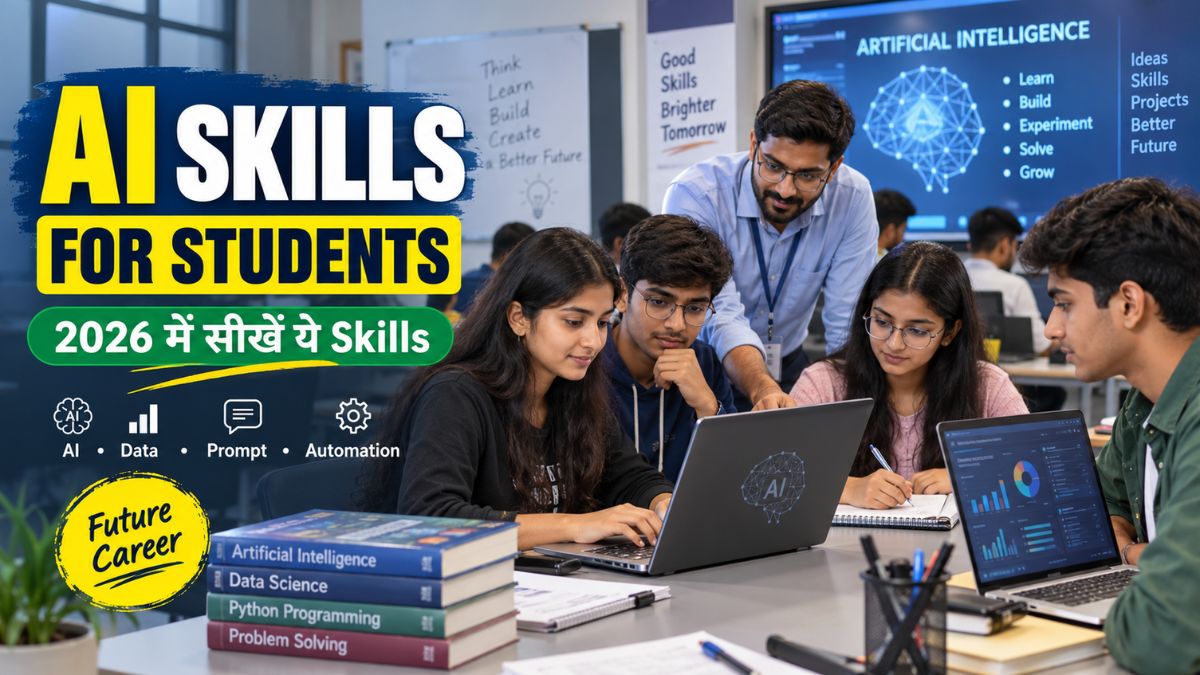
आज के छात्रों के लिए AI सीखने का मतलब सिर्फ Coding या AI Engineer बनना नहीं है। AI Literacy, Prompt Writing, Data Skills, Automation और Critical Thinking जैसी क्षमताएं पढ़ाई से लेकर Internship और भविष्य के करियर तक उपयोगी हो सकती हैं।
AI Skills for Students 2026: क्यों जरूरी हो रही हैं AI Skills?
Artificial Intelligence यानी AI अब केवल टेक्नोलॉजी कंपनियों तक सीमित नहीं रह गई है। शिक्षा, रिसर्च, बिजनेस, कंटेंट, डेटा विश्लेषण और कई दूसरे क्षेत्रों में AI आधारित टूल्स का इस्तेमाल बढ़ रहा है।
भारत में भी AI और Computational Thinking को शिक्षा और Skill Development से जोड़ने पर जोर दिया जा रहा है। NEP 2020 में Artificial Intelligence, Big Data और Machine Learning जैसे उभरते क्षेत्रों के महत्व को स्वीकार किया गया है। वहीं 2026-27 से CBSE ने कक्षा III से VIII के लिए Computational Thinking और Artificial Intelligence का नया curriculum framework भी शुरू किया है।
Also Read:
 UP Scholarship 2025-26: 3.16 लाख छात्रों को फिर मौका, 1 सितंबर से खुलेगा पोर्टल, जानें पूरी जानकारी
इसका मतलब यह नहीं है कि हर छात्र को Machine Learning Engineer बनना होगा। एक Commerce student के लिए AI का सबसे उपयोगी इस्तेमाल Data Analysis और Productivity हो सकता है, जबकि Arts student Research और Writing workflows पर ध्यान दे सकता है।
इसलिए AI Skills for Students 2026 को किसी एक नौकरी की तैयारी के रूप में नहीं, बल्कि अपनी मौजूदा पढ़ाई और career skills को मजबूत करने के तरीके के रूप में देखना अधिक उपयोगी है।
AI Skills सीखना क्यों फायदेमंद हो सकता है?
AI का सही इस्तेमाल छात्रों को कई सामान्य academic और professional tasks में मदद कर सकता है।

उदाहरण के लिए छात्र AI का इस्तेमाल:
- किसी कठिन topic को अलग-अलग स्तर पर समझने के लिए कर सकता है।
- Project के लिए शुरुआती ideas तैयार कर सकता है।
- Notes का सारांश बनाकर revision कर सकता है।
- Practice questions तैयार कर सकता है।
- Spreadsheet data को समझने में सहायता ले सकता है।
- Coding की शुरुआती समस्याओं को समझ सकता है।
- Internship या project workflow में repetitive काम कम कर सकता है।
लेकिन AI को सोचने और निर्णय लेने का replacement नहीं समझना चाहिए। AI द्वारा दिया गया उत्तर गलत, अधूरा या संदर्भ से बाहर हो सकता है। इसलिए Verification और Human Judgment भी AI skills का हिस्सा हैं।
World Economic Forum के Future of Jobs Report 2025 के अनुसार AI और Big Data जैसी technological skills की मांग बढ़ने की उम्मीद है, लेकिन Analytical Thinking, Creative Thinking, Resilience, Collaboration और Lifelong Learning जैसी human capabilities भी महत्वपूर्ण बनी रहेंगी।
2026 में छात्रों को कौन-सी AI Skills सीखनी चाहिए?
नीचे दी गई सात skills को एक क्रम में सीखने पर छात्र केवल AI tools चलाना ही नहीं, बल्कि उन्हें पढ़ाई और वास्तविक projects में बेहतर तरीके से इस्तेमाल करना सीख सकता है।
1. AI Literacy और Responsible AI Use
सबसे पहली skill है यह समझना कि AI क्या कर सकता है और क्या नहीं कर सकता।
AI Literacy में केवल किसी chatbot को prompt देना शामिल नहीं है। छात्र को यह भी समझना चाहिए कि:
- AI उत्तर कैसे generate करता है।
- AI गलत या fabricated information दे सकता है।
- हर AI-generated fact सही नहीं होता।
- Sensitive और personal information AI tools में डालना जोखिमपूर्ण हो सकता है।
- Copyright और plagiarism से जुड़े नियमों का ध्यान रखना चाहिए।
- महत्वपूर्ण information को reliable sources से verify करना जरूरी है।
उदाहरण के लिए यदि कोई छात्र AI से किसी historical event की जानकारी लेता है, तो उसे textbook, सरकारी source, university resource या अन्य भरोसेमंद reference से महत्वपूर्ण facts cross-check करने चाहिए।
CBSE के नए CT & AI curriculum में भी digital literacy, responsible technology use, critical thinking और ethical decision-making पर जोर दिया गया है।
शुरुआत कैसे करें:
पहले AI की limitations, hallucination, privacy, copyright और responsible use के basic concepts समझें।
2. Prompt Writing और Prompt Engineering
AI tool से बेहतर output लेने के लिए स्पष्ट instruction देना सीखना उपयोगी है।
एक अच्छा prompt सामान्यतः बताता है:
- आपको क्या चाहिए?
- किस context में चाहिए?
- किस audience के लिए चाहिए?
- output किस format में चाहिए?
- किन सीमाओं या conditions का पालन करना है?
उदाहरण
कम स्पष्ट prompt:
“मुझे Physics पढ़ाओ।”
बेहतर prompt:
“मैं कक्षा 12 का छात्र हूं। Electromagnetic Induction को आसान हिंदी में समझाइए। पहले concept समझाएं, फिर Faraday’s Law का simple example दें और अंत में 5 practice questions दें।”
दूसरे prompt में context, level, output structure और objective स्पष्ट है।
Prompt Writing का उद्देश्य केवल लंबा prompt लिखना नहीं है। असली skill है समस्या को स्पष्ट रूप से define करना और AI को सही context देना।
3. Generative AI और AI Tools का Practical Use
तीसरी skill है अलग-अलग AI tools का उपयोग अपने actual workflow में करना।
छात्र Generative AI का इस्तेमाल कई कामों में कर सकते हैं:
- Brainstorming
- Study planning
- कठिन topic को सरल भाषा में समझना
- Revision notes तैयार करना
- Practice questions बनाना
- Language improvement
- Presentation ideas
- Coding assistance
- Research के शुरुआती चरण में information organisation
लेकिन एक महत्वपूर्ण नियम याद रखें:
AI से assignment लिखवाकर बिना समझे submit करना skill development नहीं है।
बेहतर तरीका है कि छात्र AI से किसी concept को समझे, फिर अपनी भाषा में उत्तर तैयार करे और जहां जरूरी हो वहां original sources का reference दे।
इससे AI एक learning assistant बनता है, shortcut नहीं।
4. Data Literacy: Data को पढ़ना और समझना
AI के दौर में Data Literacy भी महत्वपूर्ण skill बन रही है।
हर छात्र को Data Scientist बनने की जरूरत नहीं है, लेकिन basic data समझना उपयोगी है।
इसमें शामिल हैं:
- Spreadsheet का इस्तेमाल
- Tables को समझना
- Charts और graphs पढ़ना
- Average, percentage और basic statistics
- Data को sort और filter करना
- गलत या incomplete data पहचानना
- Misleading charts या statistics को समझना
Student example
मान लीजिए किसी college project में 500 students का survey किया गया। केवल average देखकर conclusion निकालना पर्याप्त नहीं होगा।
छात्र को यह भी देखना चाहिए:
- Sample कैसे चुना गया?
- कितने responses मिले?
- Data में missing values हैं या नहीं?
- Chart सही scale इस्तेमाल कर रहा है या नहीं?
- क्या conclusion वास्तव में data से support होता है?
यही Data Literacy AI-generated analysis को blindly accept करने से भी बचाती है।
5. AI Automation और Workflow Thinking
AI का अगला practical स्तर है यह समझना कि किसी repetitive काम को workflow में कैसे बदला जा सकता है।
उदाहरण:
एक college student हर सप्ताह:
- अलग-अलग documents से information इकट्ठा करता है।
- उसे spreadsheet में डालता है।
- Data को साफ करता है।
- Summary तैयार करता है।
- फिर report बनाता है।
ऐसे workflow के कुछ repetitive हिस्सों को AI या no-code/low-code automation tools की मदद से व्यवस्थित किया जा सकता है।
छात्र छोटे प्रयोग कर सकते हैं, जैसे:
- Form responses को spreadsheet में व्यवस्थित करना।
- लंबे notes से structured summary तैयार करना।
- Project research को categories में sort करना।
- नियमित study tasks के लिए template-based workflow बनाना।
यह skill सिर्फ “एक AI tool जानने” से अलग है। यहां लक्ष्य है:
Problem → Steps → Tools → Automation → Result
इस तरह सोचने की आदत आगे चलकर internship और workplace projects में भी काम आ सकती है।
6. Basic Coding और Technical Understanding
हर student को advanced programming सीखना जरूरी नहीं है। लेकिन यदि कोई छात्र technology, data, software या AI-related career की ओर जाना चाहता है तो basic coding काफी उपयोगी हो सकती है।
शुरुआत में इन चीजों पर ध्यान दिया जा सकता है:
- Programming logic
- Variables और conditions
- Loops
- Functions
- Basic Python
- Data handling
- APIs की basic understanding
- AI systems के basic concepts
Python विशेष रूप से Data Analysis, Automation और AI/ML के शुरुआती projects में उपयोगी हो सकती है।
लेकिन coding की depth career goal पर निर्भर होनी चाहिए।
Arts student: basic scripting + data handling पर्याप्त शुरुआत हो सकती है।
Commerce student: Python से ज्यादा पहले Excel, data analysis और business applications पर ध्यान उपयोगी हो सकता है।
Engineering/Computer Science student: Python के साथ algorithms, APIs, databases और ML fundamentals की ओर आगे बढ़ा जा सकता है।
इसलिए “AI सीखना = पहले Python सीखना” हर student के लिए सही formula नहीं है।
7. Critical Thinking, Communication और Problem Solving
यह skill list का सबसे महत्वपूर्ण हिस्सा है।
AI तेजी से answer दे सकता है, लेकिन answer सही है या नहीं, यह तय करना अभी भी इंसान की जिम्मेदारी है।
छात्र को सीखना चाहिए:
- AI output को verify करना
- Facts और opinions में अंतर करना
- Multiple sources compare करना
- Problem को छोटे हिस्सों में तोड़ना
- सही सवाल पूछना
- अपने conclusions को स्पष्ट रूप से explain करना
- Written और verbal communication सुधारना
- नए tools के अनुसार adapt करना
AI skills और human skills को अलग-अलग नहीं देखना चाहिए।
AI + Domain Knowledge + Critical Thinking + Communication का combination किसी एक AI tool को सीखने से कहीं अधिक उपयोगी हो सकता है।
इन 7 AI Skills को एक-दूसरे से कैसे जोड़ें?
इन्हें अलग-अलग courses की सूची की तरह सीखने के बजाय एक learning chain के रूप में समझें:
AI Literacy
↓
AI की capabilities और limitations समझें
↓
Prompt Skills
↓
AI को बेहतर instructions देना सीखें
↓
AI Tools
↓
Study और productivity workflows में प्रयोग करें
↓
Data Skills
↓
Information को समझें और verify करें
↓
Automation
↓
Repetitive workflows को व्यवस्थित करें
↓
Technical Skills
↓
जरूरत के अनुसार Python/API जैसी skills जोड़ें
↓
Critical Thinking + Communication
↓
Output को verify करके वास्तविक problem solve करें
यही approach छात्र को केवल “AI user” से आगे ले जाकर practical problem solver बनने में मदद कर सकती है।
Stream के हिसाब से कौन-सी AI Skills उपयोगी हैं?
| छात्र की पृष्ठभूमि | प्राथमिक AI Skills |
|---|---|
| कक्षा 9–12 | AI Literacy, Prompting, Research Verification, Basic Coding |
| College/University | Generative AI, Data Analysis, Domain-specific AI Tools, Projects |
| Commerce | Excel, Data Analysis, AI Productivity, Business Analytics |
| Arts/Humanities | Research, Writing Assistance, Data Interpretation, AI-assisted Workflows |
| Science | Data Analysis, Coding, Research Tools, AI/ML Basics |
| Engineering/Computer Science | Python, ML Fundamentals, APIs, AI Engineering Concepts |
यह कोई अनिवार्य curriculum नहीं है। छात्र अपने subject, रुचि और career goal के अनुसार इसका चयन कर सकते हैं।
AI Skills कैसे सीखें? 3 महीने का Practical Roadmap
नीचे दिया गया roadmap एक सुझाव है, कोई सरकारी curriculum नहीं।
पहला सप्ताह: AI Basics
सीखें:
- AI क्या है?
- Generative AI क्या है?
- AI की limitations
- Hallucination
- Privacy
- Copyright
- Responsible AI use
Practice: किसी एक topic पर AI का answer लें और कम से कम दो भरोसेमंद sources से उसके महत्वपूर्ण facts verify करें।
दूसरा सप्ताह: Prompt Writing
सीखें:
- Context देना
- Role और objective बताना
- Output format तय करना
- Examples देना
- Constraints लगाना
- Follow-up prompts से output सुधारना
Practice: एक ही question के लिए तीन अलग prompts बनाएं और देखें कि output कैसे बदलता है।
तीसरा सप्ताह: AI for Study और Productivity
AI का प्रयोग करें:
- Revision plan
- Practice questions
- Concept explanation
- Brainstorming
- Language improvement
- Project planning
Practice: किसी एक chapter के लिए AI से study plan बनवाएं, लेकिन final notes स्वयं तैयार करें।
चौथा सप्ताह: Data और Spreadsheet Skills
सीखें:
- Tables
- Sorting/filtering
- Basic formulas
- Charts
- Percentage और averages
- Data quality checking
Practice: अपने किसी छोटे survey का data लेकर एक spreadsheet और दो meaningful charts बनाएं।
दूसरा महीना: Automation या Python
यहां अपनी दिशा चुनें।
अगर non-technical field में हैं:
Automation, spreadsheets और AI productivity पर ध्यान दें।
अगर technology/data में रुचि है:
Python basics, data handling और APIs की शुरुआत करें।
तीसरा महीना: 2–3 छोटे Projects बनाएं
Certificate जमा करने के बजाय कुछ वास्तविक बनाना ज्यादा उपयोगी हो सकता है।
Project 1: AI Study Assistant
किसी एक subject के लिए:
- topic list
- revision plan
- practice questions
- answer verification checklist
तैयार करें।
Project 2: Student Data Dashboard
एक छोटा sample dataset लेकर:
- spreadsheet
- calculations
- charts
- short findings
तैयार करें।
Project 3: AI-assisted Research Workflow
किसी academic topic पर:
- research questions
- source collection
- source verification
- summary
- final presentation
का workflow तैयार करें।
इन projects को portfolio में दिखाते समय यह भी बताएं कि AI का इस्तेमाल कहां किया और final decisions/verification आपने कैसे किया।
2026 में Students के लिए Free या Low-cost AI Learning Options
AI सीखने के लिए शुरुआत में महंगे course खरीदना जरूरी नहीं है। पहले official और reputable resources देखें।
1. Skill India Digital Hub और SOAR
सरकार के Skilling for AI Readiness (SOAR) programme के तहत Skill India Digital Hub पर foundational और application-oriented AI courses उपलब्ध कराए गए हैं।
PIB के अनुसार programme में चार foundational courses और बाद में 50 AI तथा AI-application-oriented NSQF-aligned qualifications शामिल की गईं। 6 अगस्त 2026 तक 5,17,477 learners enrolled और 1,00,664 learners certified हो चुके थे।
2. IndiaAI के Learning Resources
IndiaAI ecosystem में students के लिए AI literacy और practical learning से जुड़े resources उपलब्ध हैं।
IndiaAI के AIKosh University Engagement Programme में अलग-अलग disciplines के students के लिए datasets, AI models, workshops और hackathons जैसे opportunities का उल्लेख है। इसमें computer science के अलावा medicine, law, economics, social sciences और arts जैसे क्षेत्रों के students भी शामिल हो सकते हैं।
3. YUVA AI for All
IndiaAI के learning initiatives में YUVA AI for All को foundational AI literacy course के रूप में प्रस्तुत किया गया है, जिसका उद्देश्य learners को AI को समझने, उपयोग करने और जिम्मेदारी से अपनाने में मदद करना है।
4. CBSE/NCERT Resources
School students के लिए CBSE और NCERT के official AI तथा Computational Thinking resources भी उपयोगी शुरुआती स्रोत हो सकते हैं।
CBSE ने academic session 2026-27 में Classes III–VIII के लिए CT & AI curriculum framework तथा student/teacher resources जारी किए हैं।
भारत में Government AI-Skilling Initiatives क्या हैं?
भारत में AI learning केवल private courses तक सीमित नहीं है।
NEP 2020
NEP 2020 ने AI, Machine Learning, Big Data और Computer Science/Data Science जैसे emerging areas के महत्व को रेखांकित किया है।
CBSE और NCERT
2026-27 में Classes III–VIII के लिए Computational Thinking और AI का curriculum framework शुरू किया गया है। इसमें logical thinking, problem solving, pattern recognition, data literacy और responsible AI जैसे concepts पर जोर है।
Skill India और SOAR
SOAR के माध्यम से AI readiness के लिए foundational तथा application-oriented courses Skill India Digital Hub पर उपलब्ध कराए गए हैं। 6 अगस्त 2026 तक 5,17,477 enrolments और 1,00,664 certifications दर्ज किए गए थे।
IndiaAI Mission
IndiaAI Mission का उद्देश्य AI ecosystem को मजबूत करना, skilled AI talent pool विकसित करना, AI infrastructure और datasets तक पहुंच बढ़ाना तथा responsible और trustworthy AI development को support करना है।
AI Skills सीखने के बाद कौन-कौन से Career Options हो सकते हैं?
AI skills कई career paths में पूरक skill की तरह काम कर सकती हैं। इसका अर्थ यह नहीं है कि केवल AI tools सीखने से कोई निश्चित नौकरी मिल जाएगी।
संभावित directions में शामिल हैं:
- AI-assisted Digital Marketing
- Data Analysis
- Software Development
- AI/ML
- Business Analytics
- Research
- Automation
- Content और Media Workflows
- Product और Operations
- Cybersecurity
- Domain-specific AI Applications
उदाहरण के लिए Commerce student Business Analytics की दिशा में जा सकता है, जबकि Computer Science student AI/ML या Software Development में specialization कर सकता है।
इसी तरह Humanities student Research, Communication या Digital Content workflows में AI skills जोड़ सकता है।
AI सीखते समय छात्रों को किन गलतियों से बचना चाहिए?
1. AI के हर जवाब पर भरोसा करना
AI confident तरीके से गलत information भी दे सकता है।
2. Assignment Copy करना
AI-generated answer को बिना समझे submit करने से learning कमजोर हो सकती है और academic-integrity के सवाल भी उठ सकते हैं।
3. Personal Data शेयर करना
Passwords, private documents, confidential academic information या अन्य sensitive information किसी AI tool में डालने से पहले privacy implications समझें।
4. केवल Tools सीखना
आज का popular AI tool कल बदल सकता है। इसलिए tool से ज्यादा fundamentals सीखना महत्वपूर्ण है।
5. हर नए AI Tool के पीछे भागना
हर सप्ताह नए tools सीखने के बजाय कुछ उपयोगी tools चुनकर उनका सही workflow बनाना बेहतर है।
6. महंगे Courses तुरंत खरीद लेना
पहले free या official resources से fundamentals सीखें। जरूरत होने पर ही paid course चुनें।
7. Salary Guarantee पर भरोसा करना
“AI सीखते ही ₹10 लाख की नौकरी” जैसी बातें skill development का reliable measure नहीं हैं। Career outcome education, fundamentals, projects, experience, communication, domain knowledge और market demand सहित कई factors पर निर्भर करता है।